In 2015 I pitched a machine to help launch Microsoft Edge: a seven-foot cabinet of copper and brass that tested your website with smoke, lights and a plasma ball, then printed the results on a till receipt. I described it as well as I could, and I could see people struggling to picture it.
Then we built it. Once people could see Admiral Edgecase, nobody needed it explained. They got it straight away.
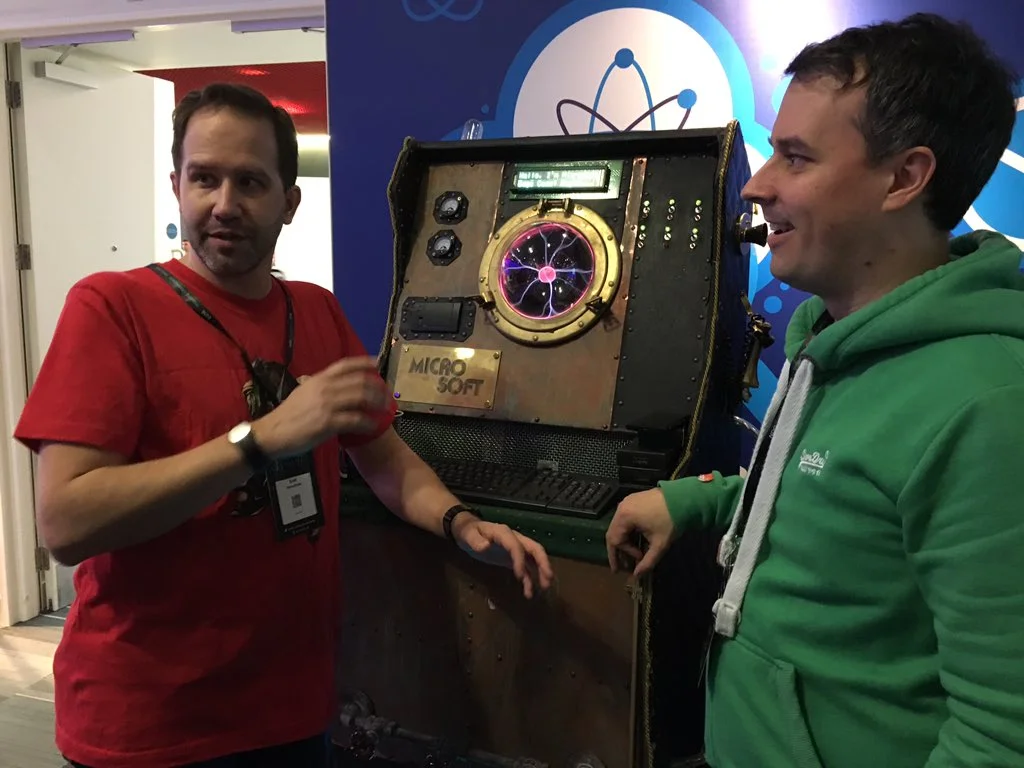
It taught me that not everyone has creative or technical vision. It’s no criticism of anyone. However well you describe an idea, people build their own picture of it, and it’s rarely the one in your head. The more audacious the idea, the fewer people can make that leap from words alone. If an idea only lands once someone has seen it, then your job is to let them see it.
For some people there is no picture at all. In 2015 the neurologist Adam Zeman gave it a name, aphantasia: ask someone who has it to imagine an apple, and nothing appears. Surveys suggest that two or three people in every hundred have no mind’s eye. Everyone else sits somewhere on a spectrum, from faint sketches to vivid, cinematic pictures. So in any pitch, some people will see your idea clearly and others will barely see it at all. And people rarely say they can’t picture something. They say they don’t like it, or they can’t see it working.
So make it visual. A sketch, a cardboard mock-up, a thirty-second video, a rough demo. Before you pitch anything, ask what the other person will actually see. If the answer is a slide of bullet points, you’re asking them to do the imagining for you.
Conversation